Showing posts with label juvenilia. Show all posts

October 18, 2016

History in the Making

The end of this interminably painful election cycle is finally approaching, and that turns out to be shamelessly relevant to another installment of my childhood writing. I've unearthed two artifacts, one a piece of journalism and the other a work of fiction, that provide some historical perspective on the last time a Clinton entered the White House.

I wrote for my high school paper, The Centipede, and eventually became the Features Editor. (I'll delve more into my life as an intrepid student reporter in a future post.) When I learned there would be a polling place located at our school in November 1992, I mobilized some of the Centipede staff to conduct exit polls. The resulting article, "Poll Predicts Election Results", demonstrated that as Precinct 6 of Concord, Massachusetts goes, so goes the nation.

A refresher: In the 1992 presidential race, Bill Clinton was elected into office with a comfortable lead over incumbent George H. W. Bush. Independent candidate Ross Perot took a strong share of the popular vote. For me, and for most of the people around me in a largely Democratic state, Clinton's election was a significant triumph. I was 17, and I had no memory of a time before Bush and Reagan.

My article about the election is mostly a dry comparison of our exit poll to the election results of the town, state, and nation, for the presidential race and the state referendum questions. I report that some voters "agreed to disclose their choices only if the reporter stepped into the side hallway, away from the line of people waiting to vote," which makes me wonder how annoying we were and how well we planned the logistics of our polling. I do at least remember doing advance research to determine where pollsters were permitted to stand.

The closing of the article also sticks out in my memory, because when I got this scoop, I knew it would make for a killer ending: "Perhaps the most interesting result of the exit poll was the confession of a hassled looking woman with a young boy. When asked for whom she voted, the woman responded confidentially, 'George Washington,' before the toddler dragged her away."

Unlike the article, I didn't remember anything about the lightly fictionalized story I found in my notebook from a few months later, on the occasion of Bill Clinton's inauguration. As usual, this piece ends just at the point when it's starting to develop a plot, but it offers a good picture of my excitement over Clinton's election.

The night before the inauguration, Dana watched the superstars fawn over Bill. She lay sprawled across her dad's bed with her math book open in front of her and guiltily watched the Inaugural Gala. Sure she had a lot of homework, but this was, as her mother would say, "history in the making."

Dana felt a certain obligation to watch the show anyway, since she had missed most of the election coverage. She hadn't seen any of the debates, though she was sorry to have missed Stockdale from the imitations she'd seen the next day. She had watched most of Clinton's speech after he won the Democratic nomination, but that was mostly because she wanted to see what Gore looked like. And she'd only seen about 5 minutes of Clinton's acceptance speech in November.

The gala was probably the most interesting, and certainly the fastest moving, part of the '92 election. She hadn't been that transfixed since she watched the election results slowly trickle in.

September 30, 2016

Build Your Own Religion

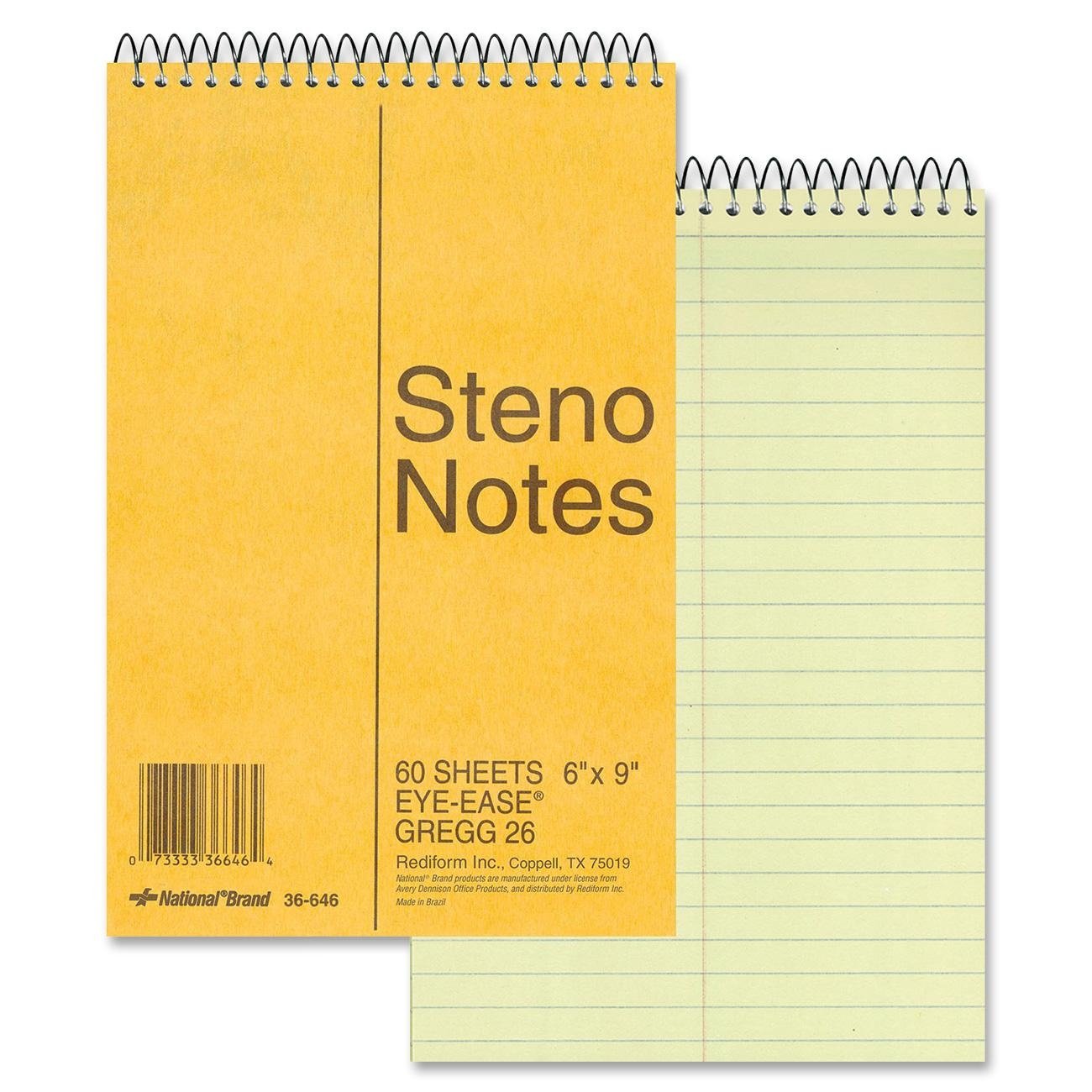
The last several examples of my childhood writing were from the many Steno notebooks I kept through high school and into college, so let's mix things up and check out some schoolwork.

As mentioned in an earlier entry, I got my first Macintosh during high school, and amazingly, most of the work written on that computer still survives. Yes, for 25 years, I've preserved my documents across computers and operating system upgrades so I can subject you to them today. In order to give you a full understanding of my sacrifice before you express your gratitude, I'll mention that a couple of years ago I realized I was on the verge of losing the ability to open files created in obsolete word processing programs, and I tediously converted them one at a time to a readable format. You're welcome.

Anyway, as mentioned in a different earlier entry, I thought a lot about religion and my lack of it during my teen years, so it's not surprising I took a class in World Religions as a senior. (Another important factor was that one of my favorite teachers taught this elective.) The class gave me an opportunity to submit some creative writing, though I'm not sure how many of the assignments were intended to take the form of stories.

In a previous class, I'd hit upon the idea of writing imagined dialogues with historical figures, and rejecting the usual essay structure earned praise from that teacher, so I milked the format again for a paper entitled "Hinduism Evaluation":

Lisa entered the temple in search of answers. "What is real?" she asked Krishna.

"Brahman is real," responded Krishna.

"But what is Brahman?" Lisa asked.

"Brahman is infinite," said Krishna. "Brahman is sat, chit, and ananda; that is to say being, awareness, and bliss. And Brahman is infinite in all these things."

"So Brahman is everything?"

"No. Brahman is not everything. Anything you can conceive is not Brahman."

"So then what is Brahman?"

Krishna pointed at a stone. "Neti," he said. "Not this. Brahman is not this stone." He pointed at a piece of wood. "Neti." He continued in this manner until Lisa motioned him to stop.

And so on, with Krishna explaining all the principles of Hinduism that I was presumably supposed to demonstrate familiarity with. I remembered none of it, so reading this paper was quite enlightening, as it were.

I don't recall the assignment for a file labeled "Build Your Own Religion". I'll speculate that at the end of the course, we were asked to construct a set of beliefs that a culture might develop. Whatever the expectation, I resorted to the power of fiction again and turned in this story:

One Who Dared To Question

[Note: It must be understood that words such as "spouse", "widow", and "All-Spirit" are merely the best English equivalents of terms which can be only roughly translated.]
 

In the beginning there was light and dark, sun and moon, earth and water, wind and rain, winter and summer, plants and animals.

There were people. They lived among the trees in huts made of branches and leaves. They drank water from the stream, gathered roots and berries, and hunted deer and rabbit with spears. They made tools from sticks and sharpened stones, cooked meat over open fires, and wore skins to keep warm in cold weather. They spoke to one another in words and drew pictures on stones.

Children were born and grew up in their parents' huts. They were taught the history and culture of the tribe by the widows. They learned from their parents and from the other parents how to gather, hunt, and cook. When children grew into men and women, they chose spouses and moved into huts with their partners. Soon, new children were born. Adults died, and sometimes children did, too. The tribe grew ever larger, and its members thanked the All-Spirit daily for their prosperity.
 

Owwoo was named for the sound the of the wolves howling at the full moon. She was born fourteen summers ago, at night, during a full moon. Owwoo's birth heralded good fortune for herself and for the tribe: each summertime birth foretold a more successful gathering season, and one born under the full moon was destined to bear many children. Owwoo began bleeding last fall, and her flow, too, coincided with the full moon, like that of her mother. Yes, said the widows to one another, Owwoo would bring times of much fertility to the tribe.

Now that Owwoo's body had changed, she was a woman, and it was time for her to move out of her parents' hut. Today was the day that she had decided to ask her closest friend Kaar to be her spouse. She had played with Kaar since they were very young, and lately they had talked together often about their futures, the tribal customs, and the All-Spirit.

August 16, 2016

A Very Minimalistic Play

It's time to move ahead in our journey through my childhood writing, so I braved my next teenage Steno notebook (#4, for those keeping track). As I read through its pages, many entries made me laugh, and even more provoked cringes. One piece of writing stood out by causing the most of both reactions.

In addition to its other exceptional qualities, this work is noteworthy because it's written as a play. When I started writing creatively in my free time during high school, one of my first efforts was a short play, but I only experimented with the format once or twice more before the piece we'll consider today. I frequently attended theater at the time, both school and professional productions, and I auditioned for every school play, though I was rarely cast, so it's no wonder I had an interest in playwriting.

Like most of my adolescent works, this one is unfinished, exhibiting my usual struggle with plot, so prepare to be left hanging. As you'll see, I put a lot of thought (a lot of thought) into elements that in retrospect weren't the most important to focus on:

(This is a very minimalistic play. What else can you expect from a play that consists entirely of one side of a telephone conversation? Consequently, the set, props, and lighting are of little importance. The play takes place in CAROL's college dorm room. All that is required are some books, notebooks, a bag of pretzels, a can of soda, some other random clutter, and of course, the all important telephone. To eliminate the need for furniture or walls, the stage can simply be darkened, and CAROL may sit center stage in the light of a large spot. Make sure the light is not too bright or harsh, as the audience needs to look at it for the entire play. Another note concerning comfort: Be sure the telephone can be comfortably held for a long period of time. A shoulder rest which attaches to the handpiece may be used, if desired.

What is important in this play is that the audience be able to follow CAROL and NICK's conversation. The actress playing CAROL should determine exactly what NICK is saying at each pause and wait the correct length of time before speaking again. Small changes may be made in the lines as the actress or director sees fit, in order to aid in comprehension or to sound more natural.

There are few stage directions. The actress may do whatever seems natural while talking on the phone: sit up, lie down, eat, drink, doodle, do leg lifts, etc. These actions should be spontaneous and unplanned.

July 21, 2016

Mornings and The Open Road

At the previous stop on this expedition through my childhood writing, we visited steno notebook #3. In addition to the piece of fiction I shared last time and the angsty journal entries I definitely won't be sharing, a couple of other stories from that period are worth pausing at before we move on.

As I've read my old work, some pieces are immediately familiar, and I recall where the stories are going, or more often, failing to go. Others come as a surprise. An untitled story about mornings fell into the second category, and I was pretty engaged and curious to discover what was going to happen. Disappointingly, after seven pages written over the course of a few weeks, the story comes to an abrupt end.

More disappointingly, at the end of this notebook in an entry reflecting on the fiction it contains, I wrote, "Whatever happened to the mornings story? That was a damn good idea with an ending in mind. I'll have to work on it." I regret to say that whatever I planned is lost to the mists of time. It's always possible the rest will turn up in another notebook, but I don't expect it to.

So I present this work with the warning that it's unfinished. That property, along with some stylistic and character elements, makes it a representative example of my (non-death-related) writing at the time.

The sudden onset of bad music at full volume started her out of a vivid dream. Driven by the screaming voices and merciless electric whine, she leapt out of bed and lunged across the room for the clock radio. Her fingers fumbled automatically for the "reset" button, located it, and depressed it. The sudden silence felt as if she had been struck deaf. Then her brain registered the traffic sounds of the city that never sleeps three stories below.

Her mind cleared of the heavy metal noise, she encountered an overwhelming desire to stumble across the room and crawl back into bed. But as she was already at the door to the bathroom, she dragged herself in there instead and turned on the cold water to the shower.

Willing herself not to think, she stepped into the shower stall. The blast of icy water shocked her awake and sent her groping for the hot water knob. The daily struggle for consciousness was over.

Putting the alarm clock at the other end of her one-room apartment had been her father's idea. The moments between getting out of bed and getting into the cold shower were the toughest part of her day. After two weeks in her apartment, with the snooze button at her fingertips and no parents or roommates to make sure she was up, she had been late to work four times. A long phone conversation with her father had resulted in the wake-up solution and the rescue of her job from threats of dismissal.
 

Mornings.
 

Her first memory:

There was a hand on her shoulder and Daddy's voice in her ear whispering, "Julie, wake up. Mommy's going to have the baby!"

Three-year-old Julie got out of bed and put on her sneakers. The routine had been carefully rehearsed several times in the past month. Julie picked up her duffel bag, which had been packed and ready for two weeks, just like Mommy's. She took Daddy's hand and went downstairs.

Mommy was putting on her jacket. She handed Julie her windbreaker. "I called Aunt Jenny and the hospital. We're all set," Mommy said.

Daddy brought the car to the front of the house and came to get Mommy and Julie. Julie looked at Mommy's big stomach, but it looked the same as ever. She hoped the baby wouldn't come out too soon.

Julie had never ridden in the car in her pajamas before. It was dark outside because the sun hadn't woken up yet. No one was awake except Mommy and Daddy and Julie and Aunt Jenny and the hospital.

June 17, 2016

Fear Itself

I'm aware that the earliest examples of my childhood writing were fun because they involved cute drawings and hilarious story concepts. Now that we're into the high school era, I hope nobody minds that it's all death and angst. I was prolific during high school, and most of my work from that period has been preserved, so we're going to be here a while.

While the Steno notebook I reported on last time is nearly all stories (or at least, story beginnings), the next one contains quite a few journal entries mixed in with the fiction. Among the raw adolescent emotions on display in these, there's the ongoing pain of that unrequited love I mentioned before: "When I am away from him I am seized with terror, and I imagine that he is hurt or dead." Also of note is the admiration I express for a friend's writing, coupled with doubt over my own: "She showed me her poems and stories all the time, and they were so good that I knew she would think mine were pitiful. Next to hers, they were."

At other points in the notebook, I'm more confident about my writing. Early in the summer after my sophomore year, I enthusiastically proclaim, "Well, today I finally began committing some of my stuff to disk. It's so nice now that I have Puck, my wonderful little Mac." (Puck was a Mac Classic, a one-piece computer with a handle, easily portable at only 16 pounds!) I write about looking through my notebook entries and deciding what to type into the computer and revise, and then I reflect, "I realized that I've got some good stuff. However, nearly everything I like is about death or dying. How totally morbid! The problem is that this morbidity is so typically adolescent that it's embarrassing." Very perceptive, Teen Lisa.

Here's one of my rare stories from the time that's not about death, though I'll warn you, it is a little scary. I suspect it's no coincidence that I wrote it just before Halloween.

Fear Itself

There is nothing quite like the thrill of sheer terror. The American media thrives on the culture's love of being frightened. Stephen King, Nightmare on Elm Street, and Unsolved Mysteries spawn books, films, and episodes in rapid succession, making money off our desire for horror and fear. And I'm the biggest sucker of all.

After seeing The Silence of the Lambs, I couldn't sleep without the light on for a week. I haven't gone near a graveyard since reading Pet Sematary. "Laura, I wish you'd stop reading those ghost stories," pleaded my mother after I woke her up after a nightmare for the third night in a row. "They're really unhealthy, honey."

But I couldn't stop. It wasn't teenage perversity that drove me to devour every thriller in the library, but a burning need to feel my heart beat faster and my breathing quicken as I reached the climax, then slam the book closed and remember with relief that it was just a story. The terror is only fun, of course, if it goes away.

Except it didn't. It got to the point where not only couldn't I walk outside in the dark, even with other people, but I couldn't sleep with the light out, and finally I couldn't be alone, not even in broad daylight.

I tried to hide my fears from my mother. I would go along with her every time she ran errands, rather than stay home alone, claiming that I had to buy something or wanted to talk to her. I declined her invitations for moonlit mother-daughter walks, explaining I had too much homework. I waited until she had tucked me in and closed the door before turning on my bedside lamp. Sometimes I got my little sister to sleep with me, promising to tell her all the high school gossip as we giggled late into the night.

But still I read the horror stories. I couldn't explain why. It was my secret addiction, and I walked around with a guilty conscience. The stories were becoming more real to me, too. I would become so absorbed in the book that I would become oblivious to everything else. When I stopped reading, I would be drenched with sweat and shaking.

May 16, 2016

My Teenage Loves

After the trauma of sharing those two high school stories about religion and death, I avoided reading further in my old notebooks for a while, but now it's time for another entry in my childhood writing series, so I've bravely forged onward.

My earliest steno notebook contains mostly lists and notes, with some writing in the back, including the first draft of the theater scene from last time. The next is almost entirely fiction. I started my personal creative writing kick during the first year of high school but really got enthusiastic about it in the summer that followed. I've read through all of notebook #2, which takes me through the first half of sophomore year.

Since all the entries are dated, I can see that from summer on, I usually wrote at least a few days a month, with periods of regular daily writing mixed with gaps of weeks when I didn't write. I often worked on the same piece for multiple days, not only in close succession, but also sometimes returning months later. The constraints of a bound notebook meant that if I'd written something else in the meantime, I'd have to continue an older story some pages on, and I didn't mark this in any way, so certain sections of the notebook contain interleaved bits of stories diverging wildly in topic or tone.

I edited as I wrote, which is visible in the frequent crossed out words and sentences, plus occasional arrows indicating parts to be reordered. As we saw last time, I later did more serious revision of selected stories on my computer. Almost everything in the notebook is unfinished. Sometimes my interest in an idea fizzled out after a page, sometimes I wrote many pages and even multiple scenes, but very little became a full story. I'm sure I usually started writing with nothing more than a premise or an opening line in mind, and it can be hard to reliably wring a plot out of that. Today I still have just as many ideas that go nowhere, but I no longer take the time to write them down until I've given more consideration to whether they're viable.

The contents of this notebook are overall pretty boring. The stories tend to star teen girls, often attending a private high school similar to mine or saddled with an annoying little brother. In a departure from writing what I knew, more of these characters drink coffee than I would have expected, since I didn't start enjoying coffee myself until my thirties. Often some promising bit of conflict is introduced, as in the story of three friends discussing a generally beloved teacher who one of them dislikes, but the idea is abandoned before we learn the cause of the turmoil. I suspect I frequently wrote myself into a corner and was unable to imagine the dark secret driving whatever came before.

The first draft of the autumn story from last month's post is in here, and to my surprise, there's also a still earlier incarnation of that story. It's much shorter, mainly a riff on the "fall is the season of dying" idea I all but wrote out of the final draft. It features characters I used repeatedly around that time, initially only in stories I told myself inside my head but eventually in some I wrote down. I probably saw some promise in the concept and decided to try it again with characters who didn't bring along all the backstory I'd already developed.

As is the case today, I read a fair amount of science fiction as a teen but didn't write much that wasn't set in the real world. The one piece of science fiction in this notebook is the start of a story set in 2010, 20 years in the future, when the earth is in crisis due to overpopulation and the hole in the ozone layer. It starts strong: "Joanie stared out the window at the gray rain and remembered a time when there was color. From behind her came the sounds of children sleeping fitfully or crying softly." Alas, after a couple of pages explaining how the world went to hell, I stopped writing.

This notebook ends with a lone entry that's pure journal. It comments on what I was up to at that particular moment (watching a Paul Simon concert airing during a public television fund drive) but mostly analyzes my unrequited crush on one of my friends: "Dammit, I love him! Love. Love. That word. Do I love him? Am I 'old enough' to love a man? Oh, sure, why the hell not?" It's full of the turmoil of not-quite-16-year-old emotion, and I'm afraid there's going to be more of that particular agony when I move on to the next notebook.

The story from this book that's most worth sharing is unlike any of the other contents, but it does represent a major aspect of my life at the time. While I angsted over painful unreturned feelings for several friends during high school, my purest love was for the music of The Beatles. It's true that I did sometimes experience so much love for Paul McCartney that I was moved to kiss a photograph of him, but on the whole, The Beatles brought me more joy than anguish. Anyway, here's this thing:

April 22, 2016

Religion, Revision, and Mortification

On this journey through my childhood writing, it is with no little trepidation that I usher us into the high school era. Midway through ninth grade, shortly before I turned 15, I started keeping a series of notebooks filled with embarrassingly earnest stories and personal musings. I wrote exclusively in steno notebooks because that's what some character did in a novel I no longer remember, and much of the work inside springs from a similar pretentiousness.

Up to this point, it's been fun to mock my early writing because it all seems so childish. Everything I've shared is either exuberantly ridiculous or surprisingly competent, and I can read it while mentally giving my young self an encouraging but patronizing pat on the head. The last story I posted, Crime Doesn't Pay, is more difficult to laugh at, because despite the clumsy dialogue and excessive cliche, I see signs pointing in the direction of the writer I am today.

In my high school notebooks, my maturation as a writer continues, with all the awkwardness that entails. Unlike the eighth grade story, written to be turned in for a class, the contents of the notebooks were private and uncensored. I've only started looking through the books, and I'm already fascinated and surprised to discover what I was preoccupied with at 15. So far, the prevailing themes are religion and death.

I'd thought I might ease myself into the high school era by first posting some class assignments, but instead I'll plunge right into the mortifying end and let you see two of these religion-and-death stories. These two works are also notable in that they are examples of a few stories I revised, purely for my own satisfaction. I wrote first drafts in the notebooks and much later, the following year, revised them on my computer (and was foresightful enough to note this in the documents for my future archivist).

We'll start with "Proof of Existence", a theater scene for two characters:

Proof of Existence

Characters:
CASSANDRA: A 13-year-old girl
JEFF: Her 17-year-old brother
 

Setting:
TIME: Present
PLACE: Cassandra's bedroom. A "typical" teenager's room. Moderately messy. Center stage is a single bed. Near the bed is a stereo.
 

[CASSANDRA is sitting on her bed, dressed in a black dress. She is sobbing. "You've Got A Friend" by James Taylor plays on the stereo. There is a knock on the door, and immediately JEFF sticks his head in the room. CASSANDRA does not respond.]

JEFF: Mom wants to know... [He notices that she is crying.] Oh. [He enters the room. He is wearing a dark suit. He sits down next to CASSANDRA and awkwardly rubs her shoulder.] Come on, Cassandra, don't cry. We have to go now. Be brave, kiddo. C'mon, stop crying. [After a pause, he reaches over to the stereo and stops the tape.]

CASSANDRA: [Looks up, still crying. She says the next half as an accusation, half as a fact.] That was our song.

JEFF: Yeah, I know. [Pause] So why were you listening to it? You knew you'd cry.

CASSANDRA: [Annoyed] Jeff, it's a funeral. You're supposed to cry.

JEFF: [Trying to make a joke] Yeah, but you aren't at the funeral yet.

[CASSANDRA turns away and buries her face in the pillow.]

JEFF: Cass, I'm sorry. I'm an insensitive jerk.

[CASSANDRA says something incomprehensible into the pillow.]

JEFF: What?

CASSANDRA: [Rolls over and sighs] Nothing.

JEFF: I'm sorry.

CASSANDRA: It's OK.

JEFF: Are you ready to go?

CASSANDRA: No. What time is it?

JEFF: [Looks at watch] Twelve thirty-six. Funeral starts at one.

CASSANDRA: I know.

[Pause]

JEFF: C'mon.

CASSANDRA: [Staring at ceiling] Jeff, why did she have to die?

JEFF: [Rubbing face with hands] I don't know, babe. I'm not God.

CASSANDRA: [Suddenly rolling over to look at him] Do you believe in God?

March 23, 2016

Crime Doesn't Pay

In this series investigating my childhood writing, we've lingered in the eighth grade period, studying just a few of the many works to come out of that year's English class. Who could forget the mood of frustration evoked by Mental Turmoil Aboard Flight 103 and its ill-considered revision? Who is eager to forget the soul-bearing honesty of An Introduction to Me and the startling revelations about shopping?

Now it's time to examine the final composition from that class, a 1600-word story that's likely the longest and most complex piece of fiction I'd produced at that point. The last month of school was spent on the various stages and drafts of this assignment, which was introduced this way: "A professional author often uses his/her personal experiences as a source for his/her writing and asks him/herself, 'What if?' Remember one of your own experiences and ask yourself, 'What if?'"

As my story's inspiration, I drew on an event I'd recently witnessed while visiting a different school. I saw two friends pulled aside by a teacher after class and questioned about test answers that suggested there had been cheating. I never learned the truth of the situation or what happened next, so I imagined a possible chain of events for this story. The way things play out in my fictional version doesn't strike me as all that believable today, but it's also not absurdly unrealistic.

I have a similarly ambivalent reaction to everything else in the story. This is not an amazing piece of fiction. It's packed with cliches both linguistic and situational, starting with the title, which doesn't even fit. Much of the dialogue is unnecessary, causing the story to drag, and I'm not surprised to discover that every pointless exchange survived intact from the first draft to the last.

On the other hand, there's a definite, if plodding, competence to the writing. The plot escalates through a series of events across multiple scenes and then reaches a conclusion. Characters develop. The premise and execution deliver a modicum of suspense. It's really not bad for a 14-year-old, and there's little in the story for me to mock.

The lack of childish ridiculousness means this work isn't all that interesting to read, but if you'd like to observe my maturation as a writer, please enjoy.

Crime Doesn't Pay

"Whadja get?" pestered Jennifer, sitting to my right at our lab desk.

"I haven't gotten mine back yet, dummy," I teased, shoving her lightly.

"Don't call me 'dummy'," she said, practically shoving me out of my chair.

"What did you get?" I asked.

"An eighty."

"Eighty? I can call you dummy if I want to."

"Here, Allison," said Ms. Corbin, handing me my science test.

Jennifer saw my grade.

"You got an eighty, too," she shrieked. "Dummy!"

The girl in front of us turned around and gave us a cold, hard stare. Jennifer stared back at her with her eyeballs almost popping out. Then she turned back to me and moved her mouth like a fish to go with her bug eyes. I laughed.

"Allison and Jennifer, could I see you after class?" requested Ms. Corbin, as the bell rang.

February 12, 2016

The Gift of Love

I don't normally mark Valentine's Day, but my eighth grade English class did, so this year I have a thematic piece of childhood writing to share in honor of the holiday.

The assignment was to write an essay or poem inspired by Valentine's Day. I guess song lyrics also counted as acceptable:

The Gift of Love
to be sung to the tune of
"I'd Like to Teach the World to Sing"

I'll give the world the gift of love
This St. Valentine's Day.
The feeling of being cared for
Will never go away.
 
This love will envelop the earth
And fill each empty space.
Everyone everywhere will smile,
All people will embrace.
 
There'll be no shouts of anger heard
And all fighting will cease.
All guns will drop from people's hands:
The world will be at peace.

I thought it was nice I came up with an interpretation of the assignment that avoided nearly-fourteen-year-old romantic angst about, say, Justin who sat in front of me in science class and made funny jokes. I started imagining a teacher having to read dozens of such compositions, so then I wasn't too surprised when I read the complete instructions and saw a variety of suggested topics entirely unrelated to romantic love. The sole opportunity to muse on a crush offers, "If you wish, you may answer this question without giving the name of the person."

My poem was an answer to number 8, "If you could give the world a valentine, what you would give and why?" Several others involve gifts, including the somewhat surreal "Pretend you are a valentine gift. What are you? To whom will you be given and why?" The rest relate to hearts, most notably "If your heart were visible for others to see, what would you want us to see?" I really hope some smart aleck wrote about regular beats and properly functioning blood vessels. I'm surprised that smart aleck wasn't me. I bet Justin would have taken the bait.

The instructions indicate we wrote the rough drafts of these compositions during class, then revised them for homework. I approached the editing more enthusiastically than with most of the other assignments, perhaps either because I wrote the first draft with less preparation or because it was poetry:

January 14, 2016

The Invention of Snow

In this installment of my childhood writing, we'll look at my eighth grade response to an assignment that I and many schoolkids experienced multiple times: the composition of an original myth.

I was well prepared for the task, since I'd produced a detailed report on Greek mythology a few years earlier. But in case I needed help getting into the right creative mindset, the worksheet for the assignment provided a whole backstory: "You are in an ancient Greek village. Several natural phenomena have occurred. These have frightened the villagers who want answers that will help them to understand the natural world around them and relieve their fears. You are the local oracle and storyteller. The villagers have come to you for answers."

This assignment was given in March, while I was presumably hoping to soon see the end of another long New England winter, so I expect the choice of natural phenomenon was simple, though my explanation is rather more convoluted.

The Invention of Snow

Long ago, before snow had been invented, winter's precipitation was simply frozen rain. Getting caught out in a storm was painful, and this falling ice did damage to buildings and trees. The gods, up on Mount Olympus, knew nothing of this, for it was never cold, and it never rained on their mountain.

One winter day, Athena was visiting the earth, disguised as an old woman. A kind farming couple, Phaelus and his wife, Pollus, fed her a humble but hearty supper. As they were eating the meal, Athena heard a crashing on the roof.

"What is that?" she exclaimed.

"What is what?" asked Pollus, puzzled.

"That noise outside," said Athena.

Phaelus gave his wife a strange look.

"It's only the rain, old mother," he comforted. "It's frozen, of course."

Athena quickly realized how conspicuous she was making herself.

"I am from a warm climate," she lied. "Our rain never freezes."

The farmers seemed satisfied with this answer, and they finished eating peacefully.

After supper, Athena thanked her hosts. She secretly blessed their fields with ever-prosperous crops, and then she was on her way.

When Athena stepped outside, she was pelted with drops of ice. Everywhere she looked, there were broken tree branches.

"Something must be done about this," she thought, hurrying back to Mt. Olympus.

When she reached the gods' palace, she went to see Zeus immediately. She told him about the frozen rain.

"We must invent something more practical and safe," she proposed.

"I agree completely," said Zeus. "I had no idea of the damage that the falling ice was causing. We should call Hephaestus to help us invent an alternative."

Zeus sent Hermes to fetch Hephaestus from his forge. Hephaestus arrived shortly. He brought Aphrodite along. Athena and Zeus explained the problem.

"The new rain should be beautiful," said Aphrodite. "Because the world looks so ugly and dead in the winter."

"And it must be lighter, so that it won't do so much damage," said Athena.

After a little more conferring, Hephaestus went back to his workshop. A few hours later, he returned.

"What do you think of this?" he asked, holding up a large piece of crystal, shaped like the snowflakes we have today.

"Oh, it's beautiful!" exclaimed Aphrodite.

Zeus and Athena admired Hephaestus' work. Suddenly Athena smacked her hand against her forehead.

"Oh, no," she exclaimed. "How could we have forgotten? The rain has to be able to melt!"

The others exchanged embarrassed glances, and Zeus hemmed and hawed.

"The shape is so beautiful," Aphrodite said after a minute.

"Athena, you should weave a star-shape like that out of frost," said Zeus.

Everyone agreed that that was a wonderful idea, so Athena went off to weave the star-shape.

She soon returned, holding the flake gently so it wouldn't melt. It was as big as a hand, and very complex.

The others decided that it was just right.

"But you will have to make so many," said Aphrodite. "Won't it be difficult?"

"We shall appoint someone to make them," decreed Zeus. "And these frost-stars will have to be less complicated."

"Make them small, so they don't have to be so intricate," suggested Hephaestus.

And so it was decided. Athena's daughter Desnowus, who was almost as talented at weaving as her mother, was made the goddess of these flakes. We get the name "snow" from the middle of "Desnowus".

As soon as it becomes cold enough for frost, Desnowus begins weaving snowflakes almost all day long. When she has enough, she glides across the sky, sprinkling them over the earth. That is how snow came to be.

December 10, 2015

Mental Turmoil Aboard Flight 103

The journey through my early writing efforts has brought us to my eighth grade English class, which as I explained last time placed an emphasis on both writing and revising. Today we're going to look at a piece of fiction that was more heavily revised between drafts than anything else that year, though unfortunately not wisely.

I have strong memories of writing this story and being quite pleased with it. Apparently it was my favorite of the works I produced that year, because I chose it as my entry in the collection our class published (Xeroxed) at the end of the year. Encountering the story again now, I found it odder than I remembered, but also duller.

I'd recalled this was a very short story, unfolding in the space of a single limited scene, but what I hadn't remembered is that the assignment was actually "Write a Story Opening That Shows Mood". That explains why this feels like the setup for something more interesting, though it doesn't explain much else.

Mental Turmoil Aboard Flight 103

The airplane glided across the runway, then left the ground with a sonic boom. A man gazed longingly through the window at the city of Chicago.

"Would you like something to drink, sir?"

George Loring looked blankly at the stewardess for a moment. He blinked and came to his senses. "Oh," he stuttered. "I-I'll have a Miller Lite."

"I'll need to see some sort of identification, sir," said the stewardess.

George, a man well into his thirties, was very flattered. "Why, thank you," he said, pulling out his license, "that's the nicest thing anyone's said to me all day."

After the stewardess left, George sank back into the plush seat and sipped his beer. He glanced through the stack of papers on the table in front of him. Most of them were forms that he had to fill out to get on the spaceship. "They can put men on the moon," he muttered, "but they can't eliminate the paperwork."

He picked up a pen and started writing his name, address, date of birth, eye color, hair color, and shoe size. Once he arrived at NASA, the papers would be processed, registered, examined, and re-examined. He knew the whole system by heart. In spite of all the hype, going to the moon just wasn't all that much fun.

"We are experiencing some turbulence," announced the computer pilot in an unnerving monotone.

"I can see that," said George, though his teeth, as his beer splashed onto the table, narrowly missing the important documents. "God, I hate traveling!"

"This isn't as bad as it seems," George thought. "I should be grateful that I am going to the moon. Most people would die for the chance."

"I wish they would," said George's cynical side. "There's a terrible population problem."

"Come on," said the optimist George. "Look around you. Don't you feel lucky?"

George looked around at the plane. It was tastefully decorated in silver and blue, with all the latest airline technology.

"No," said George, "I feel like an idiot talking to myself. But yes, I suppose that I am lucky, having an all-expense paid trip to the moon to do boring experiments." He sighed. "Oh, well. Anti-gravity is nice."

Before George could continue his schizophrenic debate, the computer announced, "We will be landing at Quayle National Airport in Cape Canaveral in five minutes."

November 20, 2015

An Introduction to Me, Age 13

Throughout this investigation of my childhood writing, I've been excited to get to the thick folder of eighth grade work. English class that year placed a heavy focus on writing, with an emphasis on the planning and revision stages. I was eager to examine pages of crossed-out sentences and scribbled notes that might reveal my early story development process.

Alas, while at least two drafts of every piece survive, the differences between versions are minimal in most cases, with only a few word choices improved, punctuation errors fixed, and maybe an occasional sentence rewritten. And really, that's not surprising, since I was a 13-year-old kid who'd always been praised for strong writing skills. Why would I bother to alter my stunning prose?

Based on my own experience and what I've observed in others, it tends to take a long time for writers to understand and accept that what pours out in the first draft is often nothing close to the best possible version of a story. Revision is time-consuming, difficult, and frustrating, so it's no wonder we resist it. Still, I applaud the Sudbury (Massachusetts) Public Schools for teaching revision in the eighth grade writing curriculum, even if this step was only cursory in practice:

October 19, 2015

Thoughts I Had While Young

Earlier in this journey through my childhood writing, I noted that I don't have much in the way of fiction from sixth grade, and the same is true of seventh, probably because my middle school curriculum put a heavy focus on creative writing in eighth grade. We'll get to that soon.

The documents preserved in my seventh grade folder are primarily nonfiction reports and essays, though one exception is an afterword I was assigned to write for the novel SHANE, speculating on what happens after the end of the story. (All I remember of this book is that it involves a guy on a horse, or maybe that means all I remember is the cover.) Throughout my school career, writing an additional chapter to a novel was a frequent (and fun, for me) assignment. If this is a widespread phenomenon, it's just occurred to me that a lot more of us have written fan fiction than we might have realized.

The most "interesting" works from this time period are a number of opinion pieces, but before we check out those essays, I want to share one fact-based report, in part because it has such a ridiculous cover.

September 10, 2015

Behind the Eye-Mirrors of a Teen Poet

Our most recent look at my childhood writing explored a survey of poetry I wrote for my seventh grade English class. I mentioned that I also kept a personal poetry journal during that time, and today I cracked it open and winced my way through. Unlike most of the other early work I've shared, these poems weren't written for school assignments, so it's possible they've never been seen by anyone else until now. Exciting, huh?

The journal is a cloth-covered blank book I probably received as a gift from a relative, perhaps at holiday time, since the first poem is dated shortly after the beginning of 1988. In fact, it commemorates the start of the year:

Midnight
Inside
Yelling, screaming
Hugging, kissing
Trumpets, whistles, laughing, singing
Outside
In the dark,
All alone,
Without a sound
The new year comes in

The structure of this poem seems influenced by the forms we were studying in class, particularly the diamond poem, but here and throughout this collection, I experimented with different styles. Incidentally, I likely spent that New Year's Eve either watching a Marx Brothers movie marathon or sitting in a wood-fired hot tub surrounded by snow. Either way, there was definitely no kissing involved, but there was certainly some singing.

I continued writing poems in this book throughout 1988, the year I turned 13, but the entries are sporadic, and the vast majority of the pages remain blank. I expect I knew even then that my path to literary fame didn't lie in poetry.

The next poem is the one I retained the strongest memory of and most dreaded facing, though I'm sure I was very pleased with it at the time:

An empty face,
With grief behind the eye-mirrors,
Reflecting back on happy days that bring no smiles.
 
A sad sigh,
Of sorrows and times gone by,
Ne'er to come again.
 
An ache of longing,
Of crying though the tear-well's dry.
 
A black dress of mourning.

That's an Extremely Serious And Weighty Composition right there. You can tell by the "ne'er".

As it happens, I distinctly recall my inspiration for this grief-stricken poem. I'd heard that a neighborhood dog was hit by a car, and later that day I saw one of the kids from that family at school, staring into the distance. Sure, I realized he was probably thinking about lunch or homework, but I connected the look on his face with his recent loss, and I was visited by the muse.

August 18, 2015

An Adolescent Survey of Poetic Forms

The previous installment of my early writing took us a bit out of chronological order to examine the museum-quality pieces preserved in my childhood home, but today we'll return to our journey through the main archives. We left off with a last look at fifth grade, and I said we were in for some middle school angst ahead.

I may have oversold the angst idea, since the trials of adolescence aren't especially apparent in the school assignments that make up most of what's been saved. I do have a personal poetry journal that probably contains a few emo gems, but I've been cringing too hard to look at properly. We'll get to it soon, I promise.

The most miserable year of my childhood was sixth grade, when I was bullied and nearly friendless (shout out if you're responsible for keeping me at "nearly"). The curriculum that year didn't involve much in the way of creative writing, and I only have one surviving piece of sixth grade work. It's a script called "A Broadcast From Valley Forge" that imagines a television news correspondent visiting General Washington's cold, starving troops to report on the desperate conditions. I have no idea whether the assignment called for this experimental anachronism or if we were expected to write something more conventional, but I do recall delivering this report in front of the class and playing all three parts. I can only imagine what this did for my social standing.

Seventh grade went better, and one bright spot was my wonderful English teacher, Mrs. Mahoney. As a unit in her class, we studied different poetry forms and composed examples of each. Let's see if my poetry skills improved any between fourth grade and seventh grade.

July 23, 2015

My Earliest Publications

I'm currently visiting my family in the town where most of my childhood writing was produced, and this provided the opportunity to unearth some new old material. This work has been preserved for posterity in frames, because it had the distinction of being published in the town newspaper. I may have peaked at the age of 13, given that my acceptance rate has plummeted since then.

I'd actually forgotten how early my first publication was, because I didn't recall that The Craziest Rainbow appeared in the venerable Sudbury Town Crier on December 9, 1982, when I was 7. The illustration unfortunately wasn't printed in color, but you can see I made up for it by hand-decorating the frame. For photos of the original manuscript of this piece and my commentary, check out the first juvenilia post.

June 26, 2015

Fifth Grade Book Covers and More

We're almost done exploring the adventure-laden elementary school era of my childhood writing. Before we move on to angst-filled middle school, I have some remaining miscellany from fifth grade to share, including a couple of illustrated covers for book projects.

First off, I did get an early start on the angst in fifth grade for at least one piece of writing. In late 1985, I was assigned to write a haiku about my fears or hopes for 1986. Forget all those online lists and quizzes purporting to prove your legitimacy as a child of the 80s. This is the real deal:

Haiku About My Fears

Such a scary thought
Nuclear war is dreadful
It could kill us all

I also had less disturbing obsessions in fifth grade, such as Greek mythology. (On second thought, most of Greek mythology is pretty disturbing.) For what I imagine was a big final project for the year, I put together a pretty impressive report, complete with a cover depicting "Mount Olympus, home of the Greek gods":

May 22, 2015

Early Book Reviews

During the investigation of my childhood writing, we've learned that in fourth and fifth grade, I especially enjoyed writing stories with mysterious and spooky elements. None of these efforts contain much in the way of actual mystery, but hey, mysteries are hard. Even after writing seriously for years, I still don't have any idea how to go about constructing a true mystery story.

As you might expect, this focus in my early writing was a result of the books I read. When asked in fifth grade to compose a brief essay about my hero, I turned in an enthusiastic tribute to John Bellairs, a writer of gothic mysteries for kids who I remember best for THE HOUSE WITH A CLOCK IN ITS WALLS. While my hero worship didn't extend to spelling his name right, it's clear that his novels influenced my writing:

My hero is author John Belairs. He writes wonderful mysteries that keep me in suspense. His stories are mostly about kids my age. Mr. Belairs writes about magical things like magic rings and curses and stuff like that. His books always have some evil creature who is trying to harm the good people. Mr. Belairs has written seven books that I know about. I have read four and found each one fantastic. The books are the kind that you just absolutely have to find out what happens next. So if you asked me to rate John Belairs on a scale of one to ten, my answer would be, "Eleven!"

My fifth grade folder includes assignments on several mystery and suspense books I admired, and I took a pleasant trip down memory lane recalling the work of some excellent writers. I also found myself rather impressed by the reviewing competence of my young self. These book reviews (okay, fine, book reports) aren't bad for a ten-year-old.

On THE LONG SECRET by Louise Fitzhugh, a sequel to HARRIET THE SPY:

Someone is leaving mysterious notes. Mousy Beth Ellen is being dragged all over by her friend Harriet to find out who. Harriet "The Spy" Welsh is determined to get to the bottom of this mystery. She'll rip apart the little town of Water Mill if that's what it takes. On the other hand, Beth Ellen has her own problem. She lives with her grandmother, but now Beth Ellen's mother is coming home. Beth Ellen doesn't like her mother, or her mother's boyfriend Wallace. Not that her mother particuarlly [sic] likes Beth Ellen. Getting back to the notes, Harriet now has a list of suspects who might be the note leaver. Is it the Preacher? Is it Jessie Mae Jenkins? Whom do you think is leaving the notes?

Sure, the final question seems a misguided attempt to "leave the reader in suspense", as instructed in the accompanying worksheet (and I believe the "whom" is both courtesy of my teacher and incorrect). But that's a pretty good summary of the plot and conflicts, and as the worksheet says, "It's not easy to tell the story of a long book in just a few sentences."

On PRISONER OF VAMPIRES by Nancy Garden:

Is the epidemic that's going around really the flu? Alex Darlington, his best friend Mike Tolliver, and his neighbor Mrs. Potter think that the "flu" might be caused by vampires! Now Alex's sister Peggy is sick, and Alex is almost under the power of Radu, a peculiar character that he meets every day at the library. Why does Alex go to the library? To work on his report: a report on vampires! Garlic, crosses, stakes, grain. Vampires, bats, coffins, evil. Who will win?

Once you've begun reading Prisoner of Vampires by Nancy Garden, you won't be able to stop. Or at least that's how I felt about this spooky, suspenseful book. Ms. Garden forms life-like characters (except the vampires, who are not alive but merely undead), particularly when the grown-ups didn't believe Alex and Mike's vampire theory. This book is written well, it is highly descriptive and frightening. I enjoyed the fact that even though this book discussed vampire movies and books such as "Dracula", it wasn't essential to know these stories. And of course, the best part of this story was: it was fun to read.

There are some darn fine review elements in there, if I do say so myself. Plus, the format of a paragraph of summary followed by a paragraph of reaction is the same one I often employ today. Good job, Past Me!

Incidentally, Nancy Garden is better known for ANNIE ON MY MIND, a novel about two girls who fall in love that was groundbreaking when it was published in 1982. I think Garden once visited my high school's Gay-Straight Alliance to talk about the book, but I might be confused about that.

Good Stuff Out There:

→ At Fiction University, Janice Hardy offers tips to Make the Most of Accidental Foreshadowing: "What almost happens is another potential area to explore for later use. Look at any close calls your protagonist has in the novel. Could they foreshadow another close call? You've already teased readers with it once, so if it happens again, they'll be all the more concerned that this time it'll be real."

April 30, 2015

Room Nine

In the most recent post of my juvenilia series, I promised to share a story from fifth grade that is maybe supposed to be a mystery, though it leaves the reader with rather more questions than it answers:

"Room Nine"

"But I can't, I just can't take a room numbered nine!" cried Ms. Raven.

"Mother," said Kitty, "please be reasonable. It's the only room the hotel has. It's eleven thirty, and you can't drive with all this rain."

"You're right, Kitty," sighed Ms. Raven. To the desk clerk she said, "We'll take it."

When they were settled in their room, Kitty wrote in her diary.

August 9, 1983

Poor Mother. Ever since Father's death on September ninth (that's 9/9), she has been so scared of the number nine. And now, on the ninth of the month, we have room nine. I wish she would get over her fear.

Kitty put away her diary and went to bed.

Though she was only fourteen, it sometimes seemed that Kitty was taking care of her forty year old mother. True, Ms. Raven earned the money to support herself and her daughter, but it seemed that she needed Kitty to survive.

In the middle of the night, Kitty awoke with a start. She had heard a huge crack over her head, and it wasn't lightning.

"Kitty, did you hear that crack?" called Ms. Raven out of the darkness.

"Yes, Mother."

Kitty got up and turned on the light. When her eyes grew accustomed to it, she realized that there was a big branch coming out of the ceiling!

There was a knock at the door. Kitty opened it and found the manager standing there.

"I see that old tree finally came down," he said. "If that branch is bothering you, you can sleep in my room."

"No, thank you," said Ms. Raven. "We're fine."

When the manager had left, Ms. Raven showed Kitty an old piece of paper. On it was written: "This room was built by P.Q. Raven."

"Why that's Father," exclaimed Kitty.

"Yes," said Ms. Raven. "He must have built this note into the ceiling, and the branch knocked it out. Now I remember that nine was his favorite number. Now it's mine, too."

I mean, what?

March 18, 2015

Youthful Science Fiction, or Something

The study of my childhood writing lingered on the prolific fourth grade period for a while, but now it's time to move ahead to fifth grade. In some respects, my writing style remained unchanged throughout the late-elementary era. For example, this paragraph from a story entitled "Pie Problems" will sound familiar to those who've been following along:

Like Susie, I have short, straight, brown hair. Our mother's hair is the same, but hers is long, almost to her waist, while Susie's and mine is only shoulder length. Dan and Dad both have curly, black hair. Everyone in our family, excluding Susie, has green eyes. Oh, by the way, my name's Johanna.

(In case you were worried about Susie's eye color, I assure you that an earlier sentence more cleverly reveals this detail: "I looked into her blue eyes and found tears in them.")

Also included in the fifth grade collection is yet another story with some trappings of the mystery genre but little actual mystery and less logic. We'll get to that next time.

In this post, I want to present a story that takes my early writing in a new direction. I would loosely classify it as science fiction in that it concerns a made-up planet and is written in an obsessively scientific style. The genre marks a departure from the rest of my stories up to this point, which are either set in the real(-ish) world or involve magic and fantastical creatures. Mostly, though, the story is notable for being just plain weird.

Records indicate that this was a timed writing exercise, with the first sentence provided as a prompt. For unknown reasons, the text begins on the back of an assignment about THE HOBBIT.

Here's the odd little story, which provoked my teacher to comment, "This was fun!":

I didn't believe this story when I first heard it, but now I do. Many, many thousands of seconds ago, on February 2, 1986, at 1:03:56, a glub popped out of its glirb.

Now, I must explain that a glub is a gigantically small creature. Glubs are clear spheres that live on the bottom of the Murumphian Sea, on the planet Ork, in the galaxy Streez. Glubs are one millimeter in diameter at birth and one centimeter in diameter when they are full grown.

A glirb looks like a white rock. Instead of hatching out of eggs, glubs pop out of glirbs. Every quid, a glub pops out of a glirb. A quid is equal to two microseconds.

But the glub this story is about was orange and ten feet in diameter! And no wonder, for its glirb was a black boulder known as "The King Stone."

All the glubs were very excited, and they appointed the orange glub ruler of Ork, and everyone lived happily in the rafter.

I am unable to follow that with any worthwhile commentary. Please feel free to share your own thoughts.

Good Stuff Out There:

→ Malinda Lo, long experienced in seeking out young adult books with diverse characters, takes a fascinating look at Perceptions of Diversity in Book Reviews: "I can't help but get the sense that there's an invisible ceiling on the number and type of issues deemed suitable for inclusion in a realistic YA novel, and typically sexuality is such a huge one that adding additional issues such as race, disability, or class sets up a book for a 'too many issues' critique."